
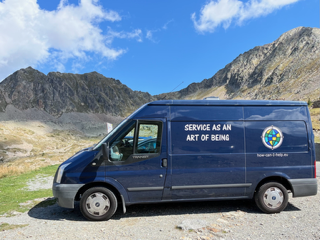
It was the spring of 2024, and I had been travelling around in my converted Ford Transit campervan for almost two years. My route had taken me to all sorts of places across Europe. Through my little non-profit venture, How Can I Help, I offered free help to people who could use an extra pair of hands. From looking after donkeys in Spain to gathering sweet chestnuts in Italy, from keeping an elderly man company in Corsica to painting a house in Denmark, and counting cutlery and pots and pans in a holiday cottage in Sardinia — what a time!
And then I broke my foot. Badly. With my mobility restricted, and having experienced what it was like not to receive help when I needed it most, I took a step back. Still living in my van, I had to slow down and spend more time on my own.
Meanwhile, as news continued to come in of so many Palestinian civilians being killed, of world leaders’ apparent indifference to the war in Sudan, and of countless other injustices, both large and small, my frustration grew and my usually cheerful mood sank lower and lower. I felt angry and powerless. What was it we had agreed on again?
After the Second World War, so many countries had come together to write and sign a document, with the good intention of making sure such horrors would never happen again. Weren’t we? This Universal Declaration of Human Rights, the most translated document in the world, seemed to have been left gathering dust in a drawer — or, to put it in more contemporary terms, buried somewhere on the internet.
What if I took that document out of the drawer, or retrieved it from the internet? What if I tried to make it more visible, in my own way? Not by pointing an accusing finger at anyone, but by raising one cheerfully in the air, as if to say: “Remember?”
And so the idea was born: to bring the entire Universal Declaration of Human Rights to life, letter by letter, in clay, on a scale impossible to overlook. That was what I was going to do!